
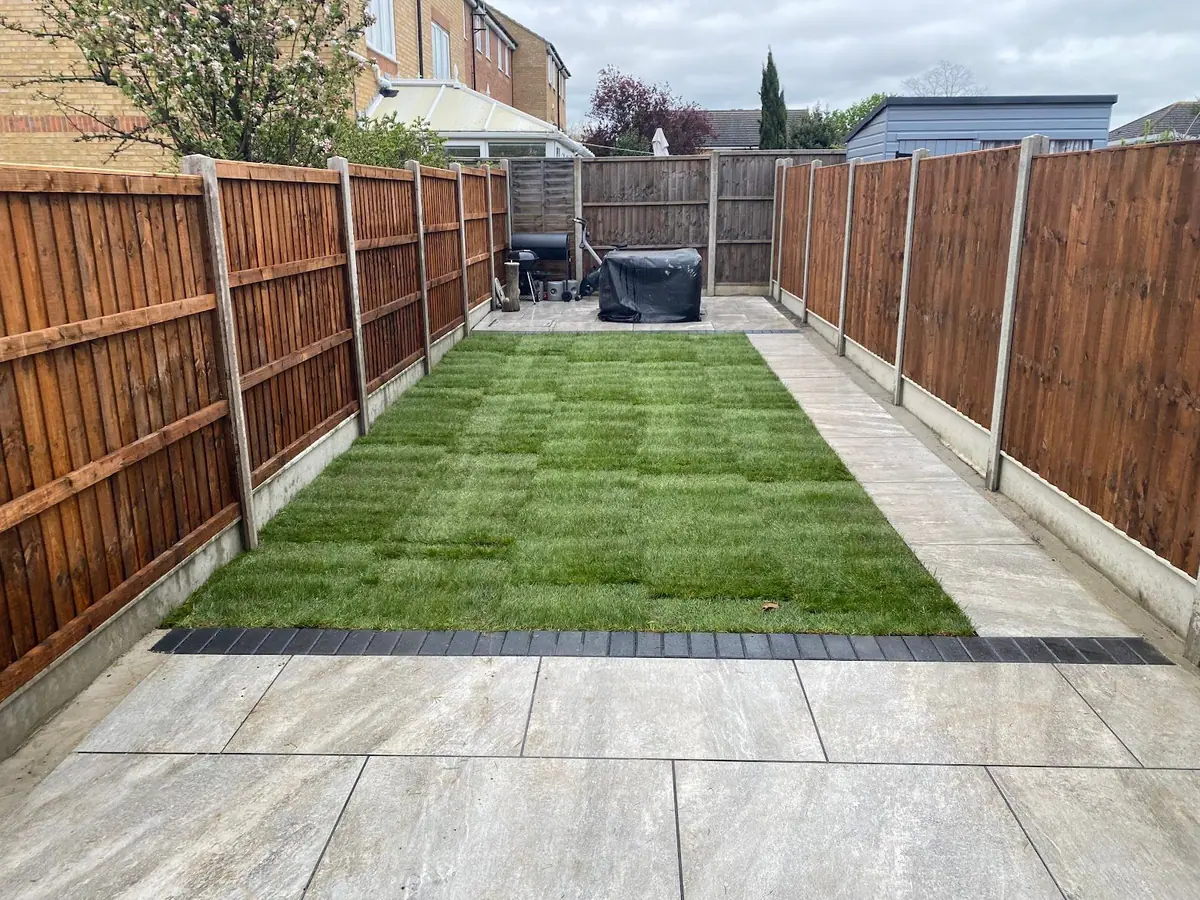
It is a common question before a new lawn goes in, and the reviews of Steve's work go both ways. Ross R in SE7 had a lawn dug up and replaced with artificial grass. Dunni I in SE3 went the other way: Steve helped weigh up saving the old astro, and Dunni I chose real grass in the end. Neither is the right answer for every garden, so here is how they compare.
Real turf
A turf lawn is cooler underfoot on a hot day, it drains like the soil under it, and it feeds the birds and insects that use the garden. When children wear a patch in it, it grows back. It also usually costs less to lay than artificial grass.
The cost is time. New turf needs watering most days for the first couple of weeks unless it rains, and it should be walked on as little as possible until the roots have taken. After that it needs mowing through the growing season, the odd feed, and some patience in deep shade, where grass struggles to grow thickly.
Artificial grass
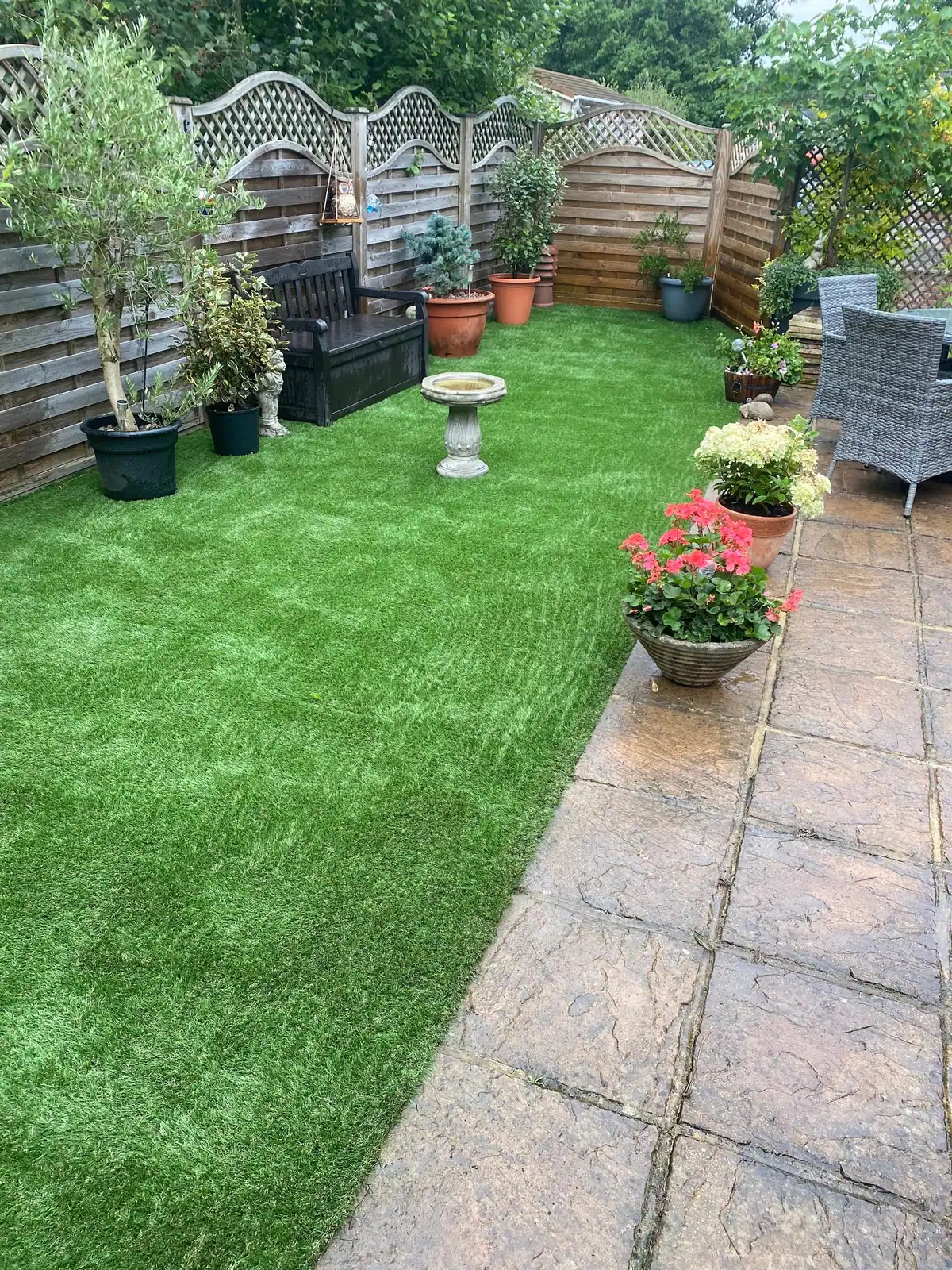
Artificial grass stays green and even all year without mowing or watering, and it does well in shade where real grass thins out. Upkeep is a brush to lift the pile, clearing leaves, and a rinse, which matters more if a dog uses it.
The trade-offs: it gets noticeably hot in strong summer sun, it does nothing for wildlife, and when it does wear out it has to be replaced rather than reseeded. A poorly built base shows quickly as dips, ridges and weeds pushing through at the edges.
The part both have in common: the ground
Whichever you choose, the work before the lawn goes down decides how it turns out. The reviews describe it well. A customer in DA14 had the ground rotavated, then proper heat-treated topsoil mixed with sand, then the turf. In ME6 the ground was so hard it had to be broken up before a new lawn could go in. For artificial grass, Ross R's old lawn was dug up and removed, and a new base went in before the grass was laid.
Artificial grass laid straight onto an old lawn or loose soil will sink and go lumpy. Turf laid onto compacted, stony ground will struggle to root. In both cases the clearing and preparation is the bulk of the job.
Questions to ask before you choose
- How much sun does the lawn get? Deep shade favours artificial grass; full sun makes it hot.
- Who uses it, and how? Football and dogs wear real grass in patches, but it recovers.
- Do you want to mow, feed and water, or would you rather not?
- Do you want the garden to help birds and insects?
Steve lays both, so you get a straight answer rather than a sales pitch for one. See turfing and lawns for his own work, including artificial grass.
Common questions
How soon can we use a new turf lawn?
Keep off it as much as you can for the first couple of weeks while the roots take, and keep it watered unless it rains. Ask Steve how to look after it when the job is done: one ME6 review mentions clear aftercare instructions.
Is artificial grass all right for dogs?
It copes with heavy use, and the backing lets water drain through. It does need rinsing where a dog toilets, and it gets hot in strong sun, so a dog needs shade to lie in.
Can artificial grass go straight over an old lawn?
Not well. The old grass and soil need to come out and a new compacted base go in, or the surface sinks and goes lumpy. Ross R's review describes a lawn dug up and removed, a new base, then the artificial grass laid in two days.
Get a free quote
Thinking about a new lawn, real or artificial? WhatsApp Steve a photo of the garden or call 07463 232 434 for a free quote.
Get in touchor call 07463 232 434